
Introducing Sylvain Grillet, Director of our Energy Storage & Grid Balancing department
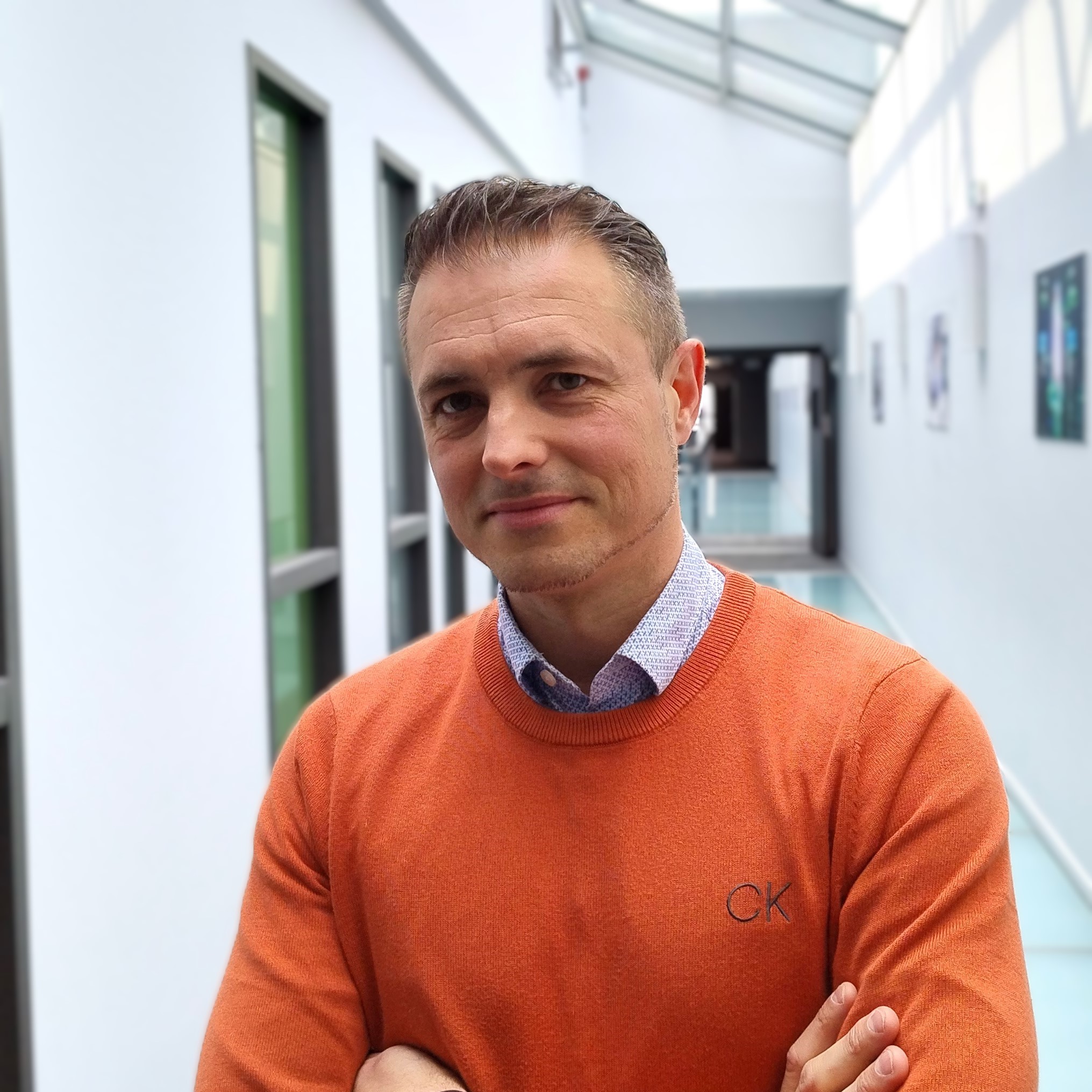
As part of our ongoing series highlighting the leadership team at SuperGrid Institute, we are excited to introduce Sylvain Grillet. Sylvain joined SuperGrid Institute over a year ago now with a strong background in power electronics, hydropower digitalisation, international team leadership and business development. He brings a unique combination of technical expertise and strategic insight to our Institute, now leading the Energy Storage & Grid Balancing department.
Can you tell us more about your background?
I joined SuperGrid Institute a year ago after spending 15 years at General Electric (GE), where I worked in several business sectors and held various roles, including managing multicultural teams.
I started out in the Power Conversion division, first in Paris and then in Belfort, working in the field of power electronics and rotating machinery for the oil and gas industry, and later in the marine sector. I initially held project engineer positions before moving into team management, while keeping a strong interest in business development.
I then completed an internal MBA, which enabled me to explore product management in the battery energy storage sector in Atlanta and strengthen my skills in finance and business management.
Back in Grenoble, I joined GE’s Hydro division to build and develop the digital activity. I led an international team responsible for defining, selling, and deploying predictive maintenance and flexibility solutions for hydropower producers.
What led you to join our management team at SuperGrid Institute?
I joined SuperGrid Institute for several reasons.
First, I was drawn to the technical interest and variety of research programmes we work on, as well as their key role in the energy transition. This diversity of fields aligns well with my past experiences.
Next, I appreciated the kindness and close-knit environment of a human-scale organisation, as well as the focus on “enjoyment” at work as one of the company’s core values.
Ultimately, it was the specific challenges of the storage department that convinced me. I now lead the Energy Storage and Grid Balancing department, and the need for renewal, positioning and development represents an exciting new challenge for me.
What struck me most was the transition from a large international corporation to a small French organisation; you feel the difference immediately!
What are the main activities of your department?
My department focuses on hydraulic energy and the flexibility of this resource to facilitate the integration of intermittent renewable energies into the power grid. To achieve this, we rely on state-of-the-art testing platforms and patented solutions.
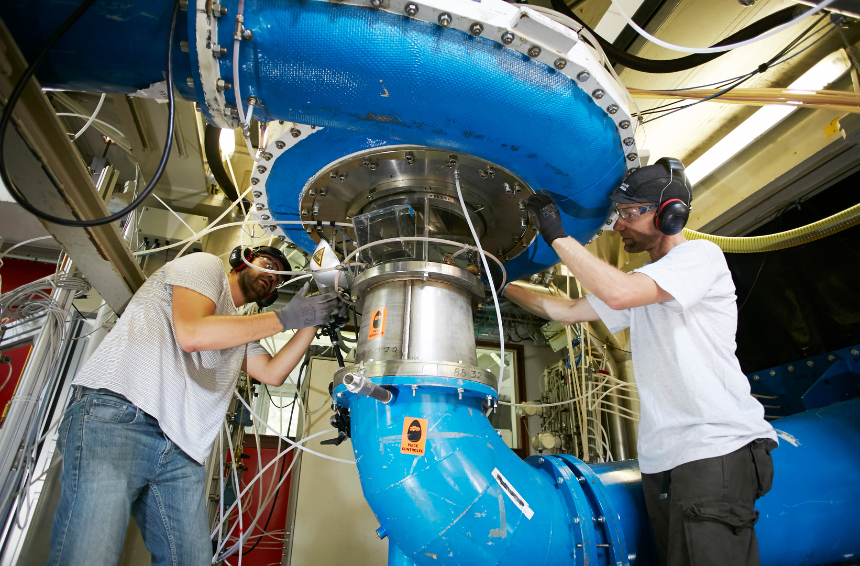
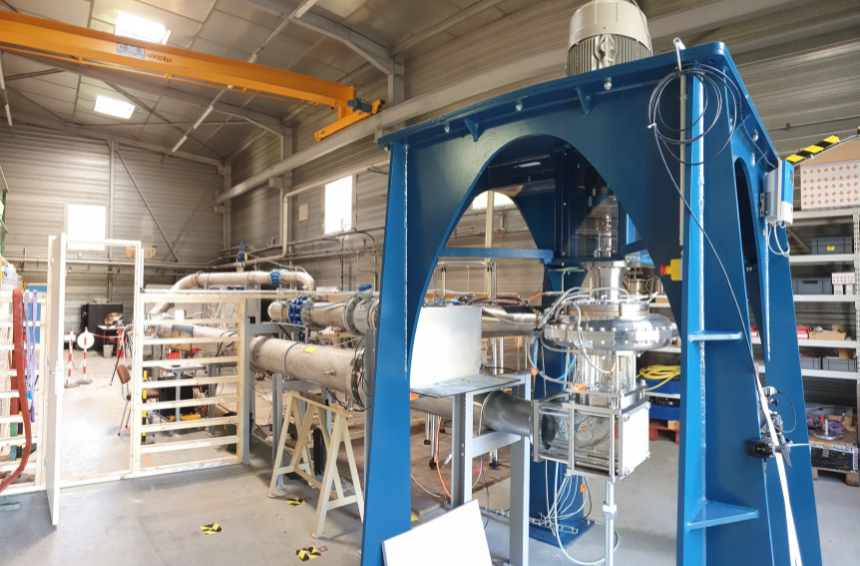
We carry out certification testing of hydraulic turbines in accordance with the IEC 60193 standard on our hydraulic machines test platform, acting as an independent laboratory.
We also operate on HydroPHIL, a unique real-time transient hydraulic platform. It enables us to address several use cases:
- Studying unsteady multiphase hydraulic phenomena, such as water column seperation in a hydropower plant or breaches in pressurised pipes for nuclear applications
- Conducting hybridisation tests, combining a battery with a hydraulic turbine to benefit from greater flexibility and extend the operating range (a solution patented by SuperGrid Institute)
- Validating hydropower plant control solutions, such as variable speed operation, or any new solution that increases the dynamism and flexibility of a plant
Finally, thanks to our expertise in the electricity market and system services, we conduct design and economic valuation studies for hydraulic structures and support operators in their renovation projects, mini-STEP development projects and multi-energy integration projects (hydro, solar, wind, thermal, etc.) in island networks.
What projects are you currently working on?
Among our current projects, we are working on Bilasurf, a European project aimed at testing bio-inspired hydraulic turbines, whose surface is inspired by shark skin, to measure its impact on efficiency.
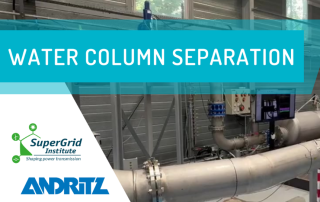
We are also collaborating with Andritz, the world’s leading manufacturer of hydraulic turbines, to carry out water column separation tests and validate the increased capacity of existing dams, a highly topical subject for which HydroPHIL offers unique testing capabilities.
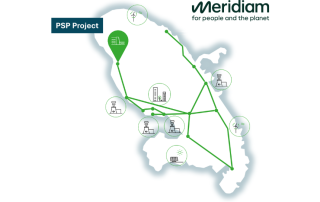
We work with several small and medium-sized hydropower producers to deploy our hybridisation solutions or to enhance small pumped storage plants (PSP), particularly in mountainous areas, by leveraging existing water storage infrastructure, such as snow cannon reservoirs. The idea is to make use of a resource, that is available 90% of the time when it is not being used to produce snow.

What are the major challenges to come for the energy transition?
The biggest challenge is integrating the massive increase of renewable energy (solar, hydro, wind) into the electricity grid, while ensuring its reliability and resilience.
By 2050, intermittent renewable energies are expected to account for 70% of global electricity production. Long-term storage and the transformation of the electricity grid will be essential to support this transition.
In your opinion, what added value does SuperGrid Institute bring to the industry?
SuperGrid Institute plays a key role in bridging the gap between academic research and industrial needs. We address upstream topics that are often difficult for industry to finance alone, as the return on investment is not immediate. This allows us to explore new scientific paths and prepare tomorrow’s—and today’s—solutions.
In addition, our cutting-edge testing facilities provide manufacturers unique capabilities to validate their solutions and deepen their understanding of complex physical phenomena. Our position as an independent and neutral laboratory allows us to work with a wide variety of manufacturers.