
Your innovation partner for a
reliable & resilient power system
Meet our experts at our stand B195 at CIGRE 2026!
SuperGrid Institute is your partner for innovation, working towards a reliable & resilient power system.
Our team supports energy utilities and technology providers to accelerate the development of Direct Current (DC) and SF6-free technologies, and improve the reliability and security of power systems with a high penetration of power electronics.
Find us at our stand B195 to meet our experts!
What we are
showcasing at CIGRE 2026
SuperGrid Institute delivers end-to-end solutions and services to enable the next generation of AC and DC power systems, including:
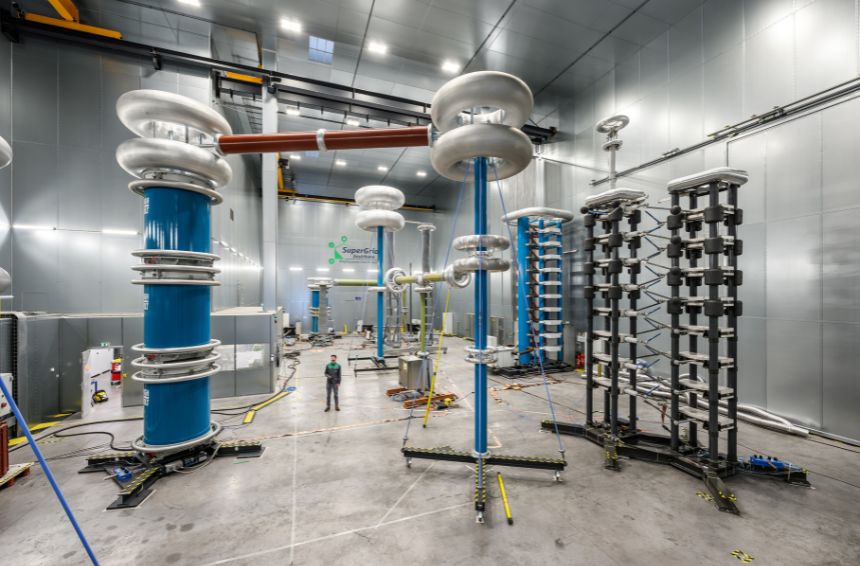
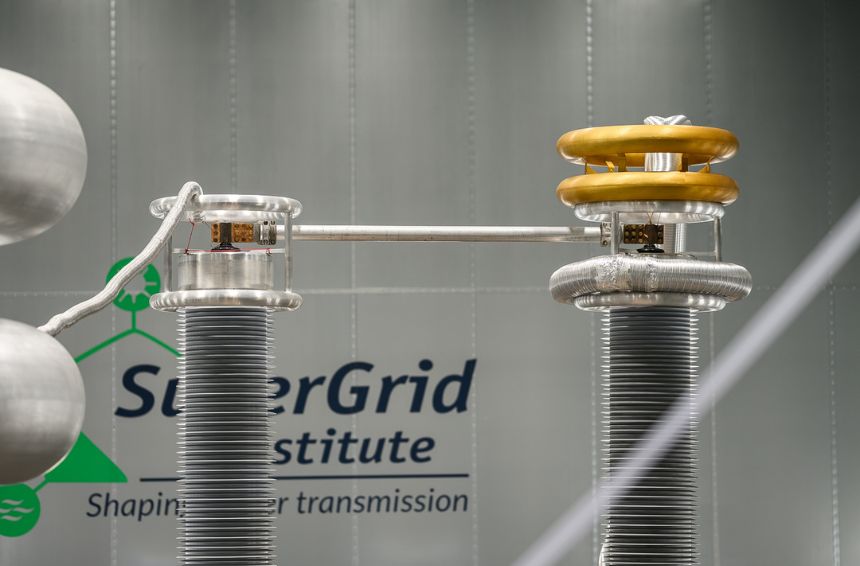
- Short-circuit & high voltage testing
- Insulation material expertise & testing
- SF6-free & DC technologies, including HVDC protection equipment
- AC/DC grid modelling & simulation, including hardware-in-the-loop

Meet our experts at our stand B195 on key topics
Got some free time? Come and meet our experts during dedicated slots
focusing on key topics for a reliable & resilient power system.
SF6 replacement: challenges in equipment design & laboratory testing
Monday 24th of August
1:30-4:30 pm
Understanding DC dielectric phenomena with space charge measurement
Tuesday 25th of August
8:30-11:30 am
Advanced stability assessment method for secure AC-DC system operations
Wednesday 26th of August
8:30-11:30 am
Protecting the grid with supraconducting fault current limiter (RSFCL)
Thursday 27th of August
8:30-11:30 am
Advanced characterisation of solid-elastomer interfaces in HV cable accessories
Thursday 27th of August
1:30-4:30 pm
Our scientific contributions
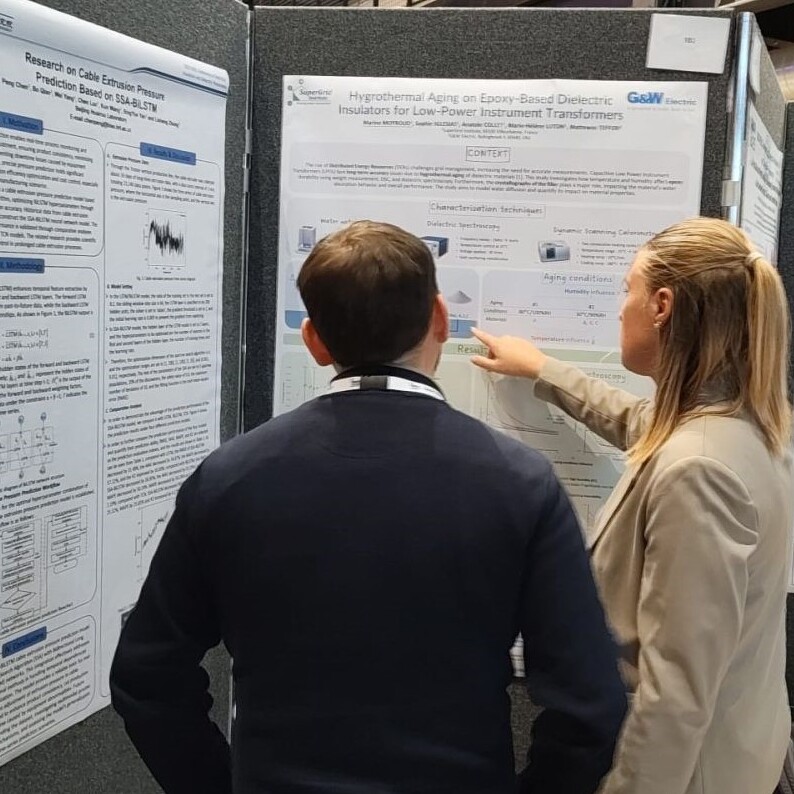
Papers / Posters
ID: 10151
A3 TRANSMISSION AND DISTRIBUTION EQUIPMENT – Full Papers
Topics: A3 PS1 – Transformation of T&D assets for evolving grid conditions
Keywords: current limitation, DC grid, power testing, protection, superconductivity
C. CREUSOT, D. BRASILIANO, Y. ABDUL-SAMAD-EL-SKAFF, A. BERTINATO, N. DEVEAUX – SuperGrid Institute
Abstract:
In the recent years, alternating current Resistive Superconductive Fault Current Limiters (RSFCL) have been introduced in distribution (i.e. 23 kV section of Seogochang substation, South Korea) and transmission networks (i.e. 220 kV Mnevniki substation in Moscow, Russia) in order to cope with increasing fault currents level using their instantaneous and self-triggering current limitation properties. As an example, they can advantageously avoid the replacement or complete upgrade of a congested substation when prospective short circuit currents exceed the ratings of the installed switchgears and busbars. These devices are used either stand alone to insert a resistance in series with the line and limit the current, or coupled in parallel with a reactor, using the RSFCL transition to insert the reactance in series with the line and achieve current limitation.
In a Multi Terminal DC grid (MTDC grid), the reaction time of the protection system in case of fault is of utmost importance to avoid voltage collapse. The RSFCL then appears singularly advantageous in case of such event: the instantaneous opposition of a resistive load to the converters prevents from a voltage collapse. Using the instantaneous transition property of the RSFCL installed at each end of the faulty line also enables to identify which line is faulty, allowing a selective triggering of the protection circuit breakers.
Additionally, the use of RSFCL limits practically the current to approximately two to three times the rated current and allows for a larger current interruption time. This makes it much less demanding for the DC circuit breaker (DCCB) to clear the fault, compared to alternative protection schemes without RSFCL.
A mechanical breaker technology using vacuum interrupters operated by a spring mechanism can be used to perform this duty.
This paper will present the generic design of a RSFCL comprising its main components: the active parts, actually consisting in windings of superconductive tapes that can be parallel and / or series connected, are dipped into a cooling liquid inside a grounded tank. The operating temperature being in the range of -200°C, liquid nitrogen (LN2) is used to maintain the superconductive properties of the high temperature superconducting (HTS) tapes. To manage the operational parameters of the LN2 bath, a cryostat and its cryogenics system are used. Finally, high voltage cryogenic current leads are needed in order to connect the internal active parts to the line.
Leveraging on the specific properties of RSFCL, a design of a MTDC grid protection system associating a RSFCL and a simple mechanical DCCB with reduced interruption capability in both normal conditions and faulty regime will be described.
MTDC grid fault scenario and protection philosophy will be discussed, based on electro-magnetic transient program simulation applied on a 4 terminals benchmark grid. The response of the RSCFCLs, the DCCB and the converters in case of fault will be assessed. This will highlight additional key advantages of the RSCFCL combined with a mechanical DCCB: no requirement of series DC reactor, absence or low transient overvoltage across both devices, indeed, unlike stand-alone DCCB, energy dissipation by zinc oxide surge arresters are not required.
To show the feasibility of the technology, experimental test results, namely dielectric test results and short circuit current test results achieved on prototypes will be presented. A 50 kVdc limitation and interruption test series was actually permormed. Some of the results will be discussed, illustrating the response of a combined RSFCL + DCCB to various prospective DC fault currents.
ID: 10775
B4 DC SYSTEMS AND POWER ELECTRONICS – Full Papers
Topics: B4 PS1 – DC equipment and systems
Keywords: HVDC, MTDC, HVDC Planning, HVDC Control, HVDC Protection, reliability, resilience
J. C. GONZALEZ-TORRES, F. PEREZ, E. WITZ, A. BENCHAIB, N. BARLA, B. PERREYON – SuperGrid Institute
M. PANTELI, S. HASHEMI – University of Cyprus
S. JANKOVIC – TenneT
C. FOOTE – The National HVDC Centre
C. MACIVER – University of Strathclyde
Abstract:
Soon
B4 DC SYSTEMS AND POWER ELECTRONICS – Full Papers
Topics: B4 PS3 – New technologies and concepts of DC and FACTS enabling energy transition
Keywords: Superconducting Cables, MVDC, DC Circuit Breaker, Converter, Resistive Fault Current Limiter
C. CREUSOT, A. BERTINATO, P.-B. STECKLER, D. BRASILIANO, N. DEVEAUX – SuperGrid Institute
A. MORANDI, E. GUERRA, M. SIMONAZZI, M. FABBRI – University of Bologna Italy
G. ANGELI, A. MUSSO, M. BOCCHI – Ricerca Sistema Energetico
Abstract:
To cope with the transfer need of GWs level wind power to continental grid, the current solution is to use HVDC systems with the tendency to increase the DC voltage typically to 320 kV or 525 kV and employ an XLPE HVDC cable. The trend to operate at higher voltage levels is dictated by the converter technologies, typically using IGBT semi-conductors, and by the XLPE copper cable technologies. Both semiconductors and cables are limited in the amount of DC current they can handle, typically ranging from 2,000 A to 3,000 A. As a result, increasing the transmitted power generally requires increasing the voltage. Another option to overcome current limitations is to parallel semiconductor devices at different levels to increase the rated current. The same approach applies to cables: multiple cables can be installed in parallel to enhance the total current-carrying capacity. However, this solution significantly increases the footprint (right-of-way) and the copper usage of the installation and therefore its overall cost.
To address these challenges, several manufacturers have leveraged superconductivity, bringing superconducting cable technology to an industrial level. Superconducting cables can be designed for medium or high voltage applications and are capable of carrying extremely high continuous currents, exceeding 10 kA.
The SCARLET project, funded under European Union’s Horizon Europe research and innovation programme, started in September 2022, brings together industrial companies and research organizations to demonstrate the industrial feasibility of rethinking large-scale Renewable Energy (RE) transmission. Instead of relying on high voltage DC, the project explores the use of medium DC voltage enabled by superconducting (SC) cable as an alternative means of power transport.
Two different SC cables technologies are considered for both offshore and onshore applications, together with their respective protection schemes. They operate at a voltage level that can potentially eliminate the need for costly offshore conversion stations. High temperature SC, specifically using Rare-earth Barium Copper oxide (ReBCo) as the conductor material and cooled with liquid nitrogen is particularly suitable for offshore application. Alternatively, low temperature Magnesium diboride (MgB2) SC cable, cooled with liquid hydrogen, could also be adopted, particularly for in-land installations. In this case, the system is proposed as a bi-energy transport solution, combining both hydrogen and electricity.
Within this scope, an electrical system architecture and its protection scheme is elaborated.
As a reference case, a 1 GW system is described, operating at ± 50 kVdc, using a High Temperature SC to export power from an offshore wind farm to onshore grid. To reach this objective, the wind turbine generator conversion chain is redesigned to export power directly at DC medium voltage, eliminating the need for additional conversion between windfarm strings and the transmission cable. On the onshore side, a medium voltage converter architecture and associated AC switchyard are proposed.
The protection strategy is analyzed with the target of protecting the cable and converter against DC short circuit faults as well as maximizing the continuity of service. Moreover, a Resistive Superconducting Fault Current Limiter (RSFCL) used in coordination with mechanical DC Circuit Breakers is considered in the protection scheme. To analyze the interaction between the SC cable, converters, breakers and RSFCL, detailed multiphysics models of the SC cable and the RSFCL are implemented into EMTP-RV software as well as an Average Arm Model of the onshore converter.
Finally, after discussing the simulation results, an overview of the status of the two types of SC cable systems and the RSFCL demonstrators will be given.
ID: 11550
B4 DC SYSTEMS AND POWER ELECTRONICS – Full Papers
Topics: B4 PS3 – New technologies and concepts of DC and FACTS enabling energy transition
Keywords: DCCB, DCSS, Multi-terminal HVDC
S. RANGASAMY, C. FOOTE, B. MARSHALL, A. KHAN, A. JANA, W. AHMAD, X. HUANG – The National HVDC Centre, SSEN United Kingdom
H. BEKKOURI – SuperGrid Institute
S. S. H. YAZDI – University of Edinburgh United Kingdom
Abstract:
Soon
ID: 11951
B4 DC SYSTEMS AND POWER ELECTRONICS – Full Papers
Topics: B4 PS3 – New technologies and concepts of DC and FACTS enabling energy transition
Keywords: DC FRT, GFM, MTDC systems, DC protection, Partially selective protection, EMT studies
J. CASTELLANOS – SuperGrid Institute / University of Strathclyde UK
L. XU – University of Strathclyde UK
F. PEREZ, A. ZAMA, A. BENCHAIB – SuperGrid Institute
Abstract:
Soon
ID: 10847
C1 POWER SYSTEM DEVELOPMENT AND ECONOMICS – Full Papers
Topics: C1 PS1 – Holistic planning of an integrated energy system for the energy transition
Keywords: Grid planning, AC/DC grids, HVDC, Multi-terminal DC grids, techno-economic analysis, Reliability and resilience.
N. BARLA, B. PERREYON, A. BENCHAIB, J.-C. GONZALEZ – SuperGrid Institute
S. JANKOVIC – TenneT
C. FOOTE – The National HVDC Centre
C. MACIVER – University of Strathclyde UK
Abstract:
Soon
ID: 10777
C6 ACTIVE DISTRIBUTION SYSTEMS AND DISTRIBUTED ENERGY RESOURCES – Full Papers
Topics: C6 PS2 – Planning and operations for 2030 and beyond in active distribution systems
Keywords: MVDC PV collector network, DC/DC converter, MVDC cable, MVDC switchgear, Small-scale and on-site validation
P. NOVAK, P. LECOQ – Schneider Electric
P. DWORAKOWSKI – SuperGrid Institute
E. LAMARD – Compagnie Nationale du Rhône
L. RUIZ – Nexans
O. GRELLIER – SCNF
Abstract:
Novel medium voltage direct current (MVDC) network is developed in south of France within a pilot project called OPHELIA. Demonstrator at ±5 kV with 1 MWp PV power is realized. Because current standards do not explicitly cover this application, the key assets were developed following technology principles: of HVDC for converters and cable system, and of MVAC for switchgear and cables. At first, system studies and simulations were performed. Considerable research effort has been further made to define strategy for protection, control and monitoring. It resulted in a need of common validation approach. Hardware-in-the-loop test bench was built, incorporating the controller of all AC-DC, DC-DC converters, switchgears and SCADA. Finally, validation of operational functionality and communication algorithms were completed in a full-scale laboratory setup. Installation of all equipment and site acceptance tests were finalized in 2025. On-site measurements are now being conducted. Outlining the experiences gained during development and verification phases, the paper provides insights into the planning of MVDC distribution networks for linear PV collector use case. The results obtained through field operation of the pilot project will help to demonstrate the effectiveness and reliability of the overall system and allow its scalability for higher power.
Monday, 24 August. 8:30-12:30. Hall Ternes (Room 1)
L. CAIZERGUES, C. TOIGO, A. GIRODET – SuperGrid Institute
A. ZOUAGHI, C. VOLLAIRE – Ecole Centrale de Lyon
Abstract:
Medium and high-voltage gas-insulated switchgear (GIS) are critical components of electrical power transmission and distribution networks. Due to the F-gas regulation entry into force in 2024, SF6 alternatives need to be found; however, the implementation of natural gases insulation causes an increase in the size of GIS. It has been seen form previous studies that the use of dielectric barriers can enhance the dielectric strength and thus keep compact design. This enhancement is linked to increase of discharge paths but also by surface charge accumulation at gas–solid interfaces.
This paper presents an investigation of the surface potential on the dielectric barrier in a DC GIS system under pressurized dry air conditions. The surface potential distribution on the dielectric barrier is obtained using an electrostatic probe connected to a displacement system. The influence of the DC voltage and pressure on surface potential accumulation is then investigated. The surface charge is then deduced from the surface potential. The surface potential increases with the decrease of the pressure. Dust figures are used to visualise the charge distributions and shows a pressure dependence for a fixed surface charge density. Surface charge accumulation for certain configurations can lead to an increase in the discharge path, which no longer follows the shortest path.
Tutorials
Explore our testing laboratories