SF₆ Replacement:
From regulatory pressure
to industrial deployment challenges
The phase-out of SF₆ is moving from a regulatory objective to a concrete industrial challenge for the power sector with a growing number of commercial solutions reaching the market. Driven by increasingly stringent environmental regulations, particularly in Europe, manufacturers are accelerating the development of new insulation concepts with alternative gases and SF₆-free equipment architectures.
This topic featured prominently throughout CIGRE 2026 discussions, such as the joint workshop A3, B3 & D1, group discussion meetings and exhibition displays. Beyond the question of replacing SF₆ itself, discussions increasingly focused on the practical challenges associated with deploying alternative technologies at scale while maintaining the performance, reliability and compactness expected from modern electrical equipment.
Beyond gas replacement: a transformation of power equipment design
Replacing SF₆ is often presented as a technology substitution challenge when it requires a broader adaptation of equipment design and qualification practices.
While alternative gases and insulation technologies are reaching higher levels of maturity, they introduce different physical behaviors and new compatibility issues that should be evaluated. Changing the insulation medium not only affects the dielectric strength but also may affect partial discharge behavior, leaking and surface charge accumulation when looking to DC equipment. These effects still need to be better understood before large-scale deployment.
At the same time, transmission and distribution operators face growing pressure to modernise networks while meeting environmental objectives. Grid expansion, electrification and renewable integration all require reliable and sustainable solutions for future substations and power infrastructure. Ability to perform retrofilling on existing Gas Insulated Switchgear will also be instrumental in achieving greenhouse gases reduction goals.
The challenge for the industry is therefore evolving. The question is no longer whether SF₆-free technologies are technically feasible but how deploying them efficiently, economically and reliably across a wide range of applications.
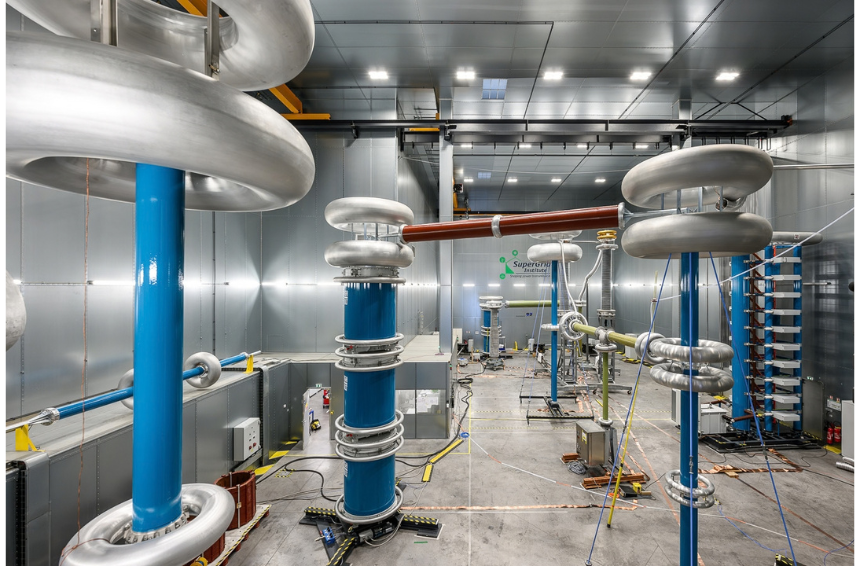
Copyright © Lotfi Dakhli Photographe – 2018
What CIGRE 2026 revealed about the SF₆-free transition
1. The European market continues to drive the SF₆-free transition
European regulations continue to accelerate the adoption of alternative technologies and strongly influence manufacturers’ development roadmaps. As a result, most of the industrial momentum currently comes from European markets, where utilities and manufacturers are actively preparing for large-scale deployment. Also regulations are progressively shifting from a GWP-only approach of the impact to a Life-Cycle Analysis.
The situation remains markedly different outside Europe. Many countries, including Canada, Japan, South Korea, the United Kingdom and Australia, currently rely primarily on reporting and emission-tracking requirements rather than outright bans on SF₆-based switchgear. In the United States, adoption remains highly dependent on state-level initiatives, with regulatory approaches varying significantly between jurisdictions.
2. SF₆-free technologies are moving from concepts to commercial products
Numerous SF₆-free solutions were exhibited across the event, demonstrating that the market is progressing beyond laboratory developments and pilot projects.
One of the most notable observations was the progress achieved at scaling up high-voltage levels. Several manufacturers presented or referenced installations operating up to 420 kV and even 550 kV, demonstrating that SF₆-free technologies are now reaching voltage levels traditionally associated with conventional SF₆-insulated equipment. The exhibition also confirmed the coexistence of several viable technological pathways, including fluoronitrile-based mixtures, fluorinated-free gas solutions and combinations of gas insulation with vacuum switching technologies, illustrating the growing maturity of the market.
Examples of technologies & applications discussed during CIGRE 2026 regarding AC equipments (some information may be missing):

Progress appeared particularly significant for AC equipment, where numerous commercial products and operational references were showcased throughout both the exhibition and technical sessions. By contrast, discussions around DC applications reflected growing industry interest, while also highlighting that qualification, insulation performance and long-term reliability remain active areas of development.
3. Equipment footprint remains a major engineering challenge
While alternative insulation technologies are becoming available, maintaining compact equipment without significantly increasing gas pressure remains one of the industry’s main technical challenges. Manufacturers must deliver SF₆-free solutions that preserve the compactness, performance and reliability expected by network operators.
Discussions during CIGRE confirmed that equipment footprint remains a key differentiator between competing approaches. As SF₆-free technologies move towards higher voltage levels, achieving equivalent dielectric performance requires careful optimisation of gas composition, insulation distances and equipment architecture, particularly for GIS applications where space constraints are often critical.
Reliability under demanding operating conditions was also highlighted during the workshop, with switching duties such as shunt reactor operation remaining an important validation topic for SF₆-free equipment.
Supporting the design and validation of next-generation insulation systems
The discussions held during CIGRE 2026 highlighted a clear shift in the industry’s priorities. As SF₆-free technologies move closer to large-scale deployment, the focus is no longer on identifying alternatives but on validating their performance and deployability at scale.
- For equipment manufacturers, key challenges include validating new insulation systems, optimising equipment footprint, adapting designs to alternative dielectric media and demonstrating long-term reliability.
- For utilities and transmission system operators, the challenge lies in selecting solutions that balance decarbonisation objectives with asset performance, operational reliability and life-cycle environmental impact.
Addressing these challenges requires advanced simulation, characterisation and testing capabilities. Leveraging its expertise in dielectric phenomena, insulation systems and high-voltage engineering, SuperGrid Institute supports manufacturers in assessing the technical implications of alternative gases for both AC and DC applications, helping validate these technologies, reduce qualification risks and support their transition towards reliable industrial solutions.
Our references

Assessing alternative insulating gases
for HVDC cable accessories