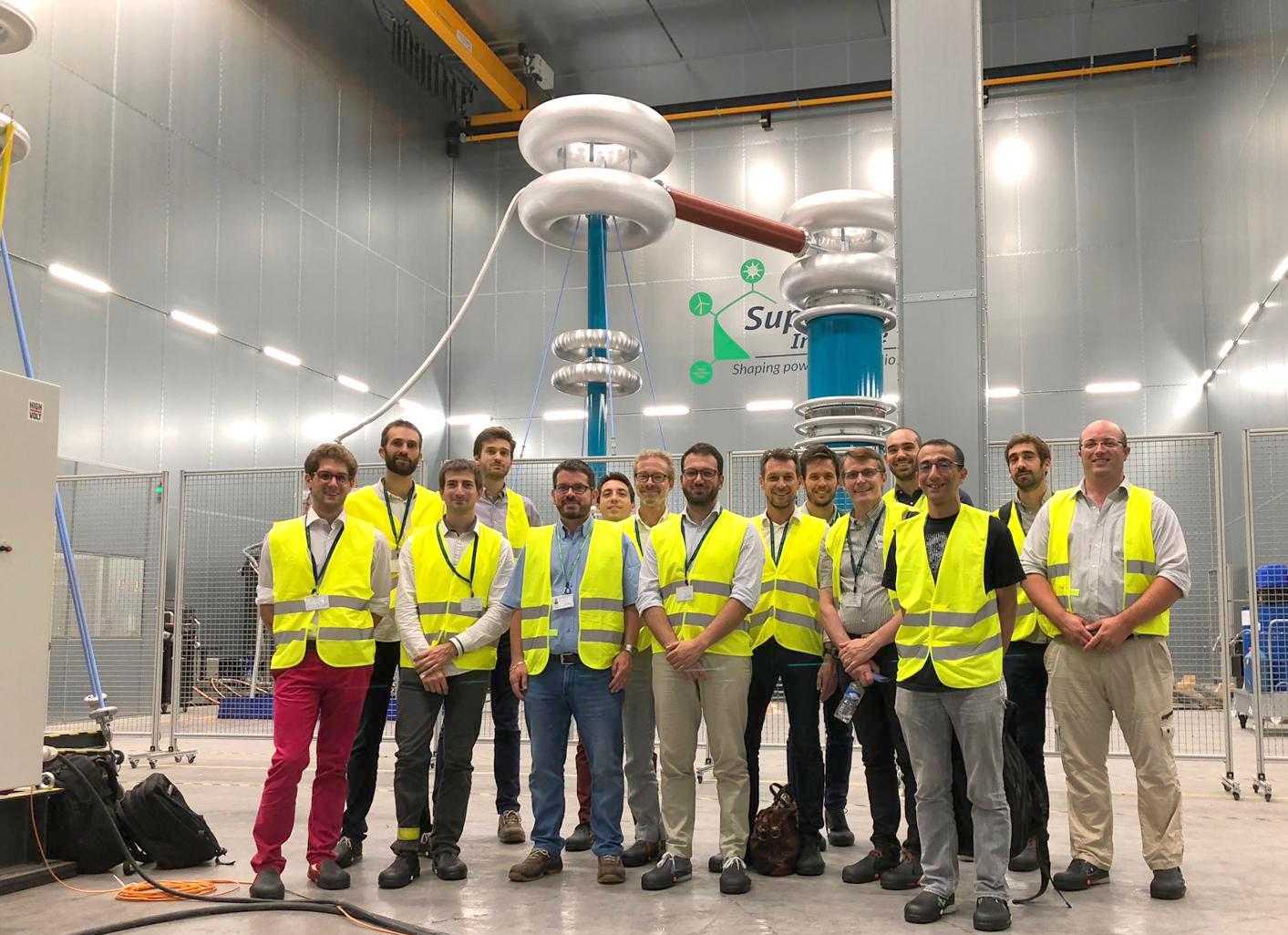

Relive the SuperGrid Institute inauguration
If you would like to re-live your day with us, or if you were unable to attend, we invite you to watch this short video to discover the day’s events and our test platforms & facilities.
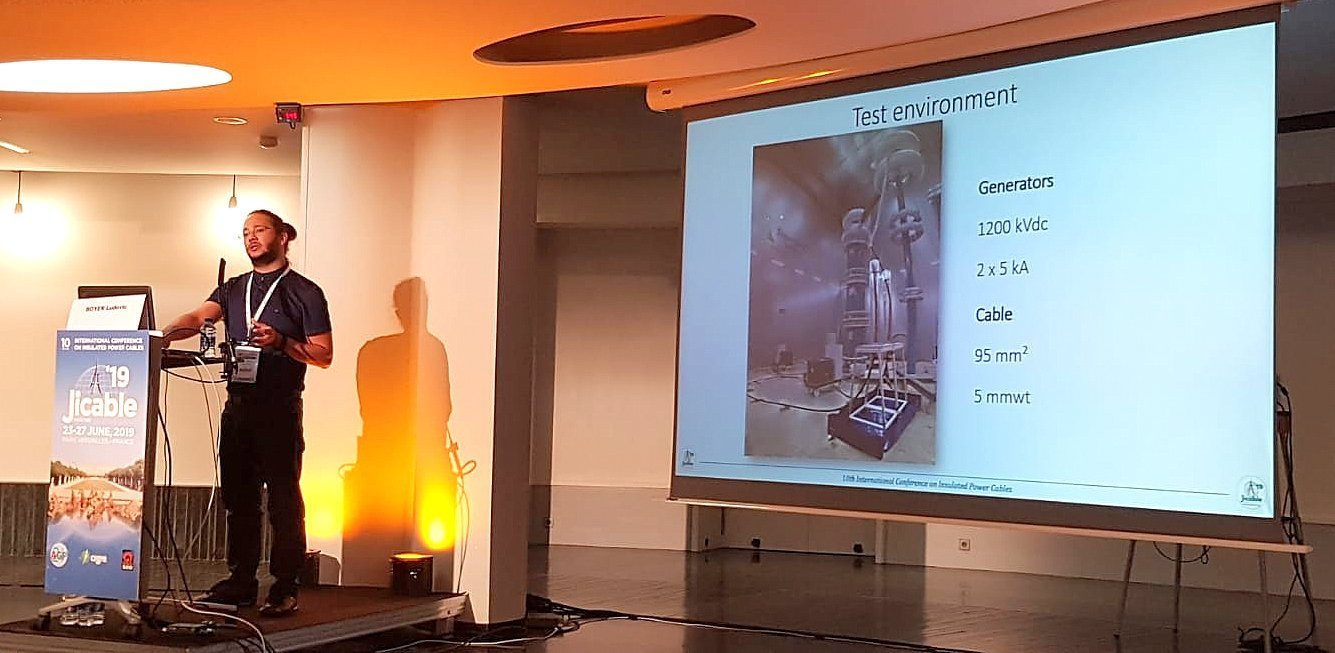
The Energy Management Control of MMC by SuperGrid Institute was presented in Japan this week at the CIGRE-IEC 2019 Conference on EHV and UHV (AC & DC), generating stimulating discussions about this new technology.
This paper investigates the impact of the operating condition on the SM voltage ripples. In particular, it is revealed that under the classical control scheme where the Modular Multilevel Converter internal energy varies naturally with the DC grid voltage, the traditional sizing approach based on the analytical expression of instantaneous SM voltage may fail to respect the SM voltage constraint. To tackle this problem, this paper presents a solution by incorporating the advantages of the explicit energy management and the developed analytical expressions of the SM voltage ripple, which achieves a better utilization of the converter asset.
Fail-to-short packages, which can still carry current after the failure of their semiconductor devices, are required for HVDC applications. However, all existing solutions are dedicated to silicon components. Here, a fail-to-short package is proposed for SiC devices. Its manufacturing process is described. 4 modules are built and submitted to intense short circuit currents (up to 2000 A). It is found that they offer a stable short-circuit failure mode, providing that the modules are mechanically clamped to prevent separation during the surge current test.
The main objective of this thesis is to develop a methodology to size PETT topologies, in order to compare them.
The integration of new technologies in the electric grids made them more and more complex, and most likely future growth of power grids will be based more on underground cables than overhead lines. One problem here, is that the mathematical model for electromagnetic simulation of power cables still has some shortcomings regarding stability, accuracy and passivity. In this thesis, we evaluate the cable parameters using analytical and numerical methods.
This thesis addresses the transient stability analysis of hybrid AC/DC electric transmission systems. More precisely two questions sought to be investigated: What is the impact of a DC contingency on AC transient stability? How can we take advantage of the DC transmission systems as control inputs in order to enhance AC transient stability?
This paper provides a fault analysis of bipolar overhead line based HVDC grids using HB-MMC converters. The impacts of fault type and fault resistance are shown and the physical behaviour of the transient fault return current is explained.
The Failure Mode Effect Analysis (FMEA) is a technique used to investigate failures in a process or component and to identify the resultant effects of these failures on system operations. In this paper it is explained how the FMEA can be used to define and assess the impact of the failure modes (FM) of a protection strategy for High Voltage Direct Current (HVDC) grids.