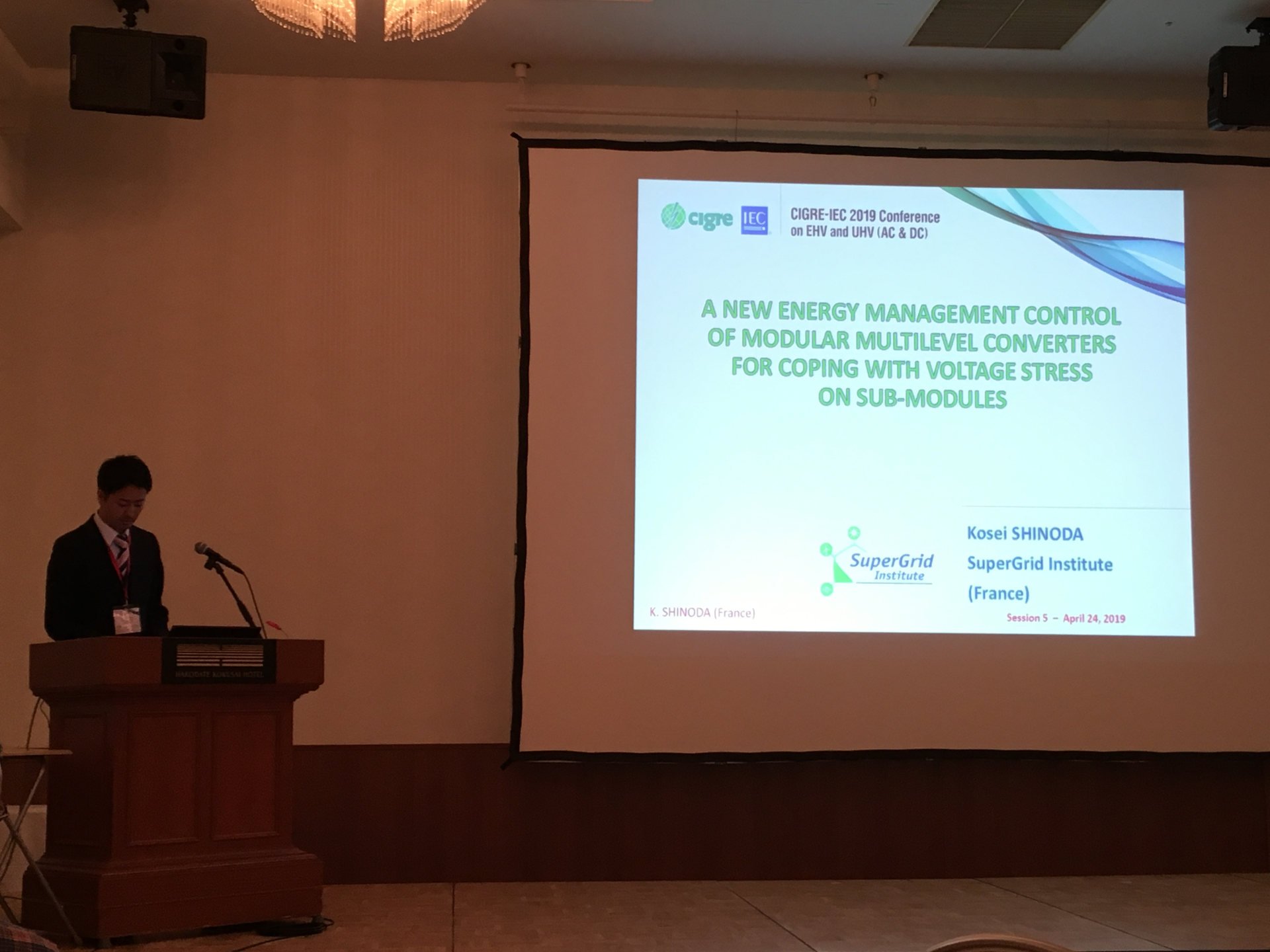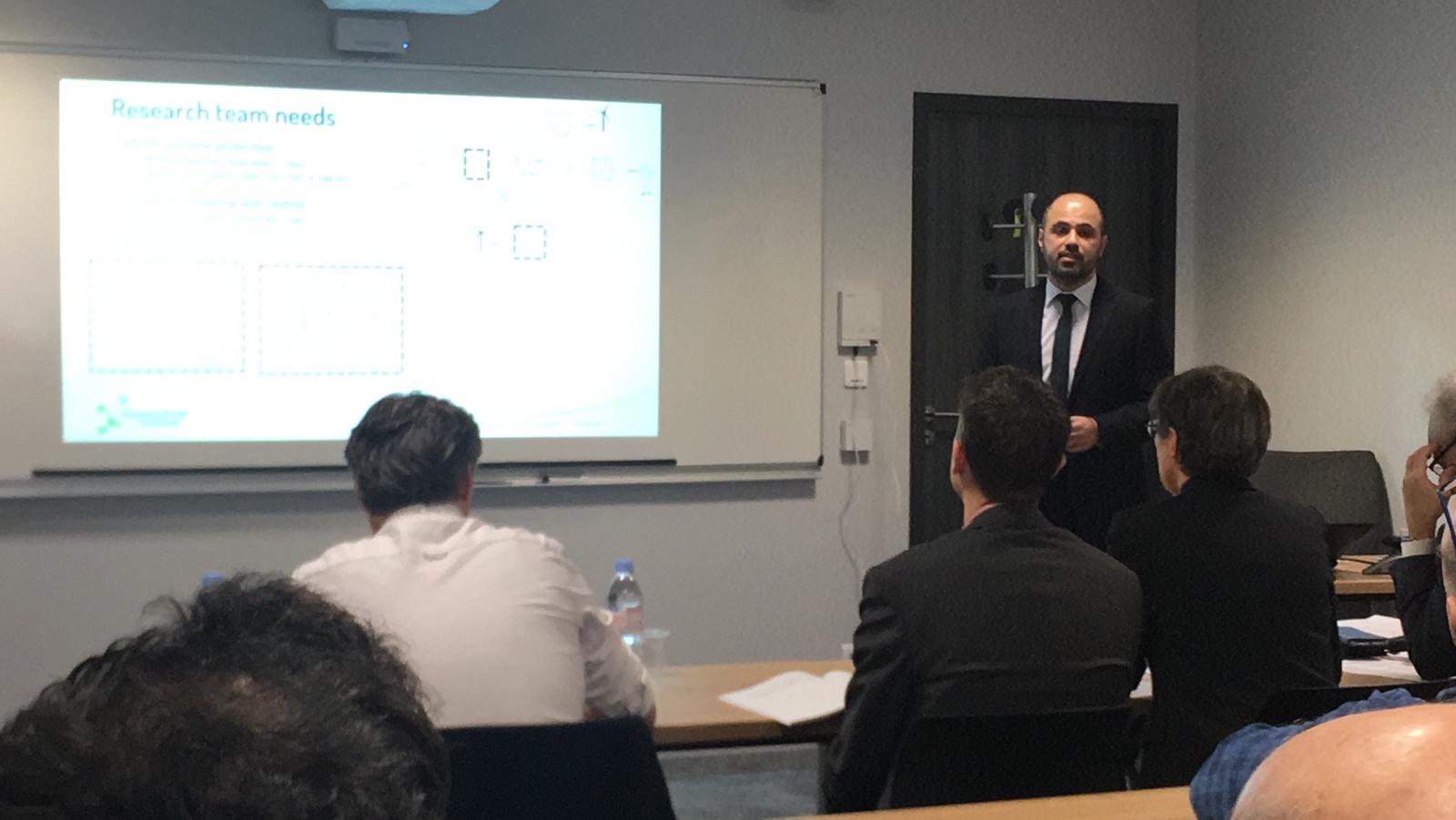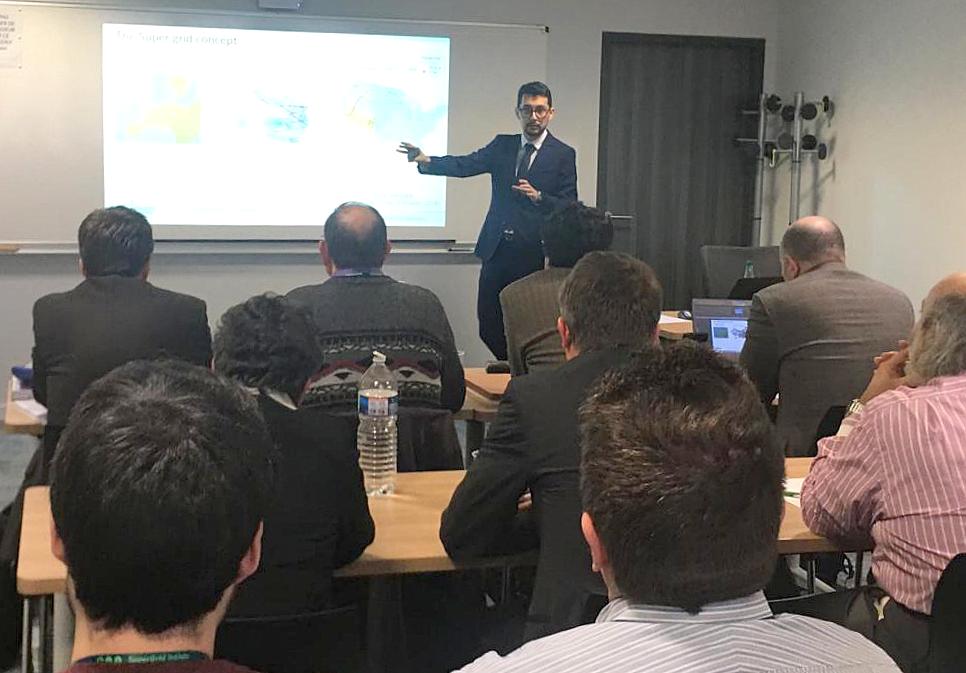

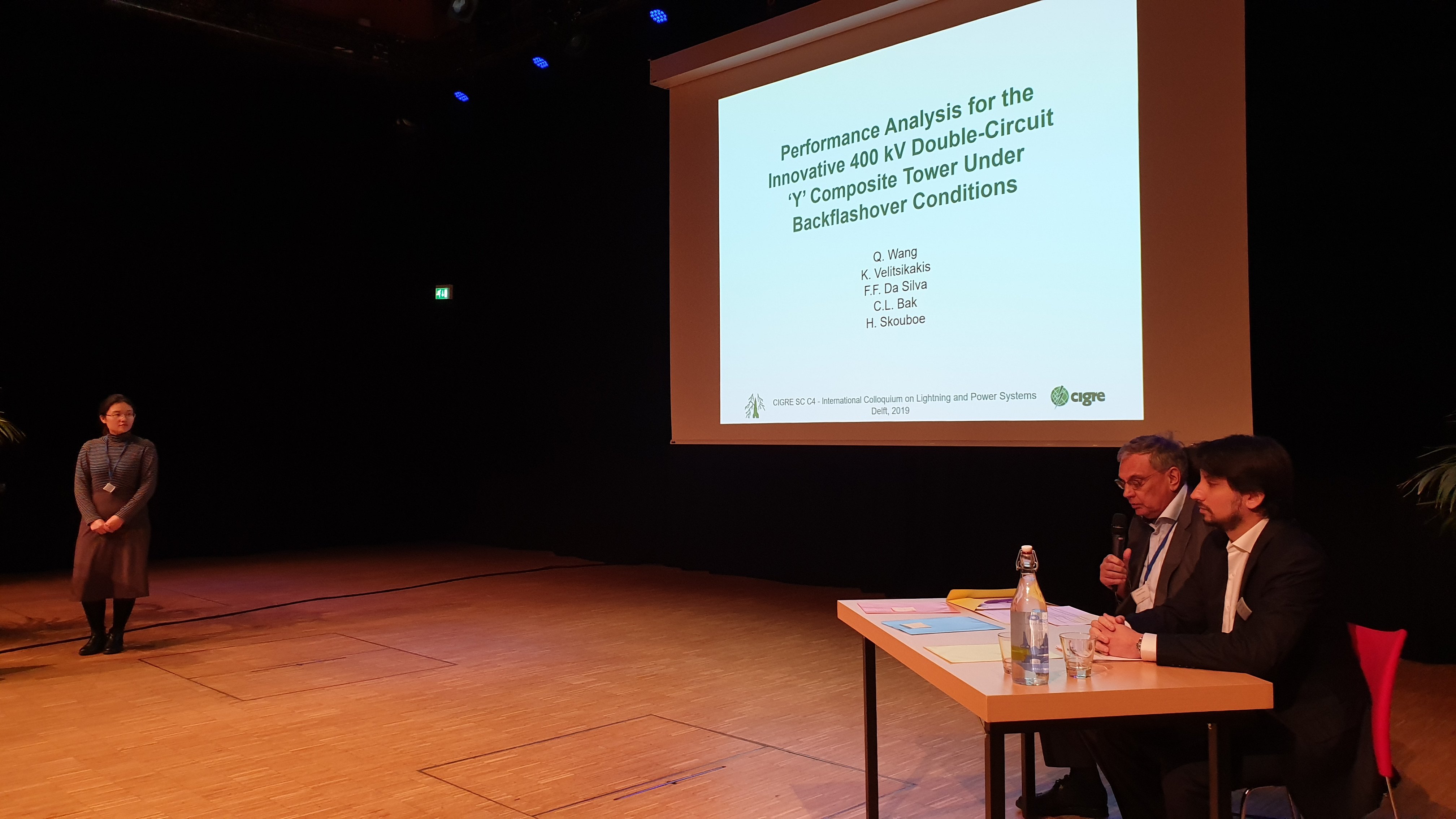
The EPE flag handover at EPE’19, Genova: SuperGrid Institute takes the reins for EPE 2020 ECCE Europe in Lyon, France

2021-08-11T17:37:33+02:00September 6th, 2019|Architecture & systèmes du supergrid, Conference, Electronique de puissance & convertisseurs|

At the closing session, Abdelkrim Benchaib, General Chairman of EPE’20, received the EPE flag, on stage, from Mario Marchesoni, General Chairman of EPE’19, in the presence of Leo Lorenz, President of the EPE association. During this conference, Abdelkrim Benchaib was also elected as a member of the executive committee of EPE ECCE Europe for 4 more years.

Tuning of Droop Parameters Using Virtual Capacitor Control to Improve Voltage Dynamics

2021-08-11T16:52:22+02:00September 2nd, 2019|Architecture & systèmes du supergrid, Publications|

This paper proposes a new approach to tuning voltage droop parameters in an MMC-based multi-terminal HVDC system. Using the new degree of freedom offered by the virtual capacitor control, the transient behavior of the DC voltage can be improved without adverse effects on the connected AC grids.

Comparaison and assessment of implementation techniques for dynamics MMC type models

2021-08-11T16:52:30+02:00September 2nd, 2019|Architecture & systèmes du supergrid, Publications|

Modeling Modular Multilevel Converters requires a special attention due to the strong associations between the accuracy and the complexity of models on one hand and the accuracy and simulation speed on the other hand. This paper investigates different implementation techniques for MMC models and gives an overview about their development and rapidity.

Effect of the Surge Arrester Configuration in MMC-HVDC Systems under DC and Converter Fault Conditions

2021-08-11T16:54:13+02:00June 18th, 2019|Architecture & systèmes du supergrid, Publications|

Different surge arrester configurations are studied for a modular multilevel converter (MMC) in a symmetrical monopole configuration. Each configuration is analyzed under fault conditions including DC side faults and faults inside the converter station. The configurations considered are compared in terms of overvoltages, current levels and energy dissipation.

PhD Amjad MOUHAIDALI “Contribution to the modelling of HVDC cables for electromagnetic transient simulations”

2021-08-11T17:42:37+02:00February 13th, 2019|Architecture & systèmes du supergrid, Phd|

The integration of new technologies in the electric grids made them more and more complex, and most likely future growth of power grids will be based more on underground cables than overhead lines. One problem here, is that the mathematical model for electromagnetic simulation of power cables still has some shortcomings regarding stability, accuracy and passivity. In this thesis, we evaluate the cable parameters using analytical and numerical methods.

PhD Juan-Carlos GONZALEZ “Transient stability of high voltage AC-DC electric transmission systems”

2021-08-11T17:42:41+02:00February 11th, 2019|Architecture & systèmes du supergrid, Phd|

This thesis addresses the transient stability analysis of hybrid AC/DC electric transmission systems. More precisely two questions sought to be investigated: What is the impact of a DC contingency on AC transient stability? How can we take advantage of the DC transmission systems as control inputs in order to enhance AC transient stability?

FMEA of a non-selective fault-clearing strategy for HVDC grids

2021-08-11T16:55:33+02:00February 7th, 2019|Architecture & systèmes du supergrid, Publications|

The Failure Mode Effect Analysis (FMEA) is a technique used to investigate failures in a process or component and to identify the resultant effects of these failures on system operations. In this paper it is explained how the FMEA can be used to define and assess the impact of the failure modes (FM) of a protection strategy for High Voltage Direct Current (HVDC) grids.

Go to Top