Fault identification in HVDC grids using a transient parametric model
This paper presents a novel single-ended fault identification algorithm for meshed High Voltage Direct Current grids.


This paper presents a novel single-ended fault identification algorithm for meshed High Voltage Direct Current grids.
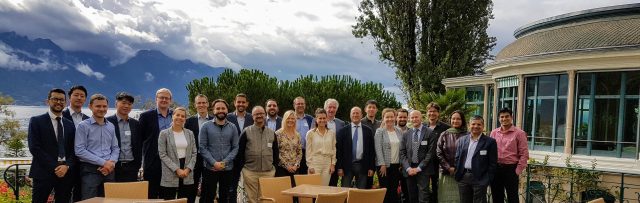
The International Smart Grid Action Network (ISGAN) has recently published its discussion paper “micro vs MEGA: trends influencing the development of the power system”, with the contribution of SuperGrid Institute experts.
The International Smart Grid Action Network (ISGAN) has recently published its discussion paper “micro vs MEGA: trends influencing the development of the power system”, with the contribution of SuperGrid Institute experts.
This paper points out the challenges to overcome when applying a protection strategy based on a non-selective fault clearing philosophy without DC reactors to an overhead line based multi-terminal DC grid.
We propose a parametric single-ended fault identification algorithm to be used in full selective protection strategy.
Energy Transition for a more sustainable world is now the priority in societies. Towards this objective, especially in Europe, the offshore wind energy development has been relatively rapid. For Offshore Wind Power Plants (OWPP) farther from the shore (50 km and beyond) Voltage Source Converter (VSC) based High Voltage DC (HVDC) Transmission has become the prominent solution. Replacement of the offshore VSC station by multiple Diode Rectifier Units (DRUs) led to a cheaper, more compact and robust solution. This thesis focusses on various technological and scientific problems involved in the control system of the Offshore Wind power Plant with Diode Rectifier (DR) based HVDC transmission. These challenges are first reviewed in detail along with the state of the art. Then, based on the system dynamics, a grid forming control scheme is proposed by using the P-V and Q-f droop relationships, with a solution for the synchronization of the wind generators. Moreover, some of the selected control solutions in the literature for this topology are reviewed, compared and assessed by using time domain simulations of a study case. Following this, the different solutions for black start of the offshore AC system are analyzed from the available literature and they are compared using the relevant qualitative criteria. The various faults in the offshore system are then analyzed and the above designed grid forming control scheme is extended with Fault Ride through (FRT) capability, for offshore AC grid faults. Finally, a brief analysis is done on the challenges for the integration of this OWPP topology into a Multi Terminal DC (MTDC) network.

Françoise Lamnabhi-Lagarrigue has been awarded the Irène Joliot-Curie 2019 Prize in the Female Scientist of the Year category. Congratulations to Françoise for this acclaimed recognition of her work!
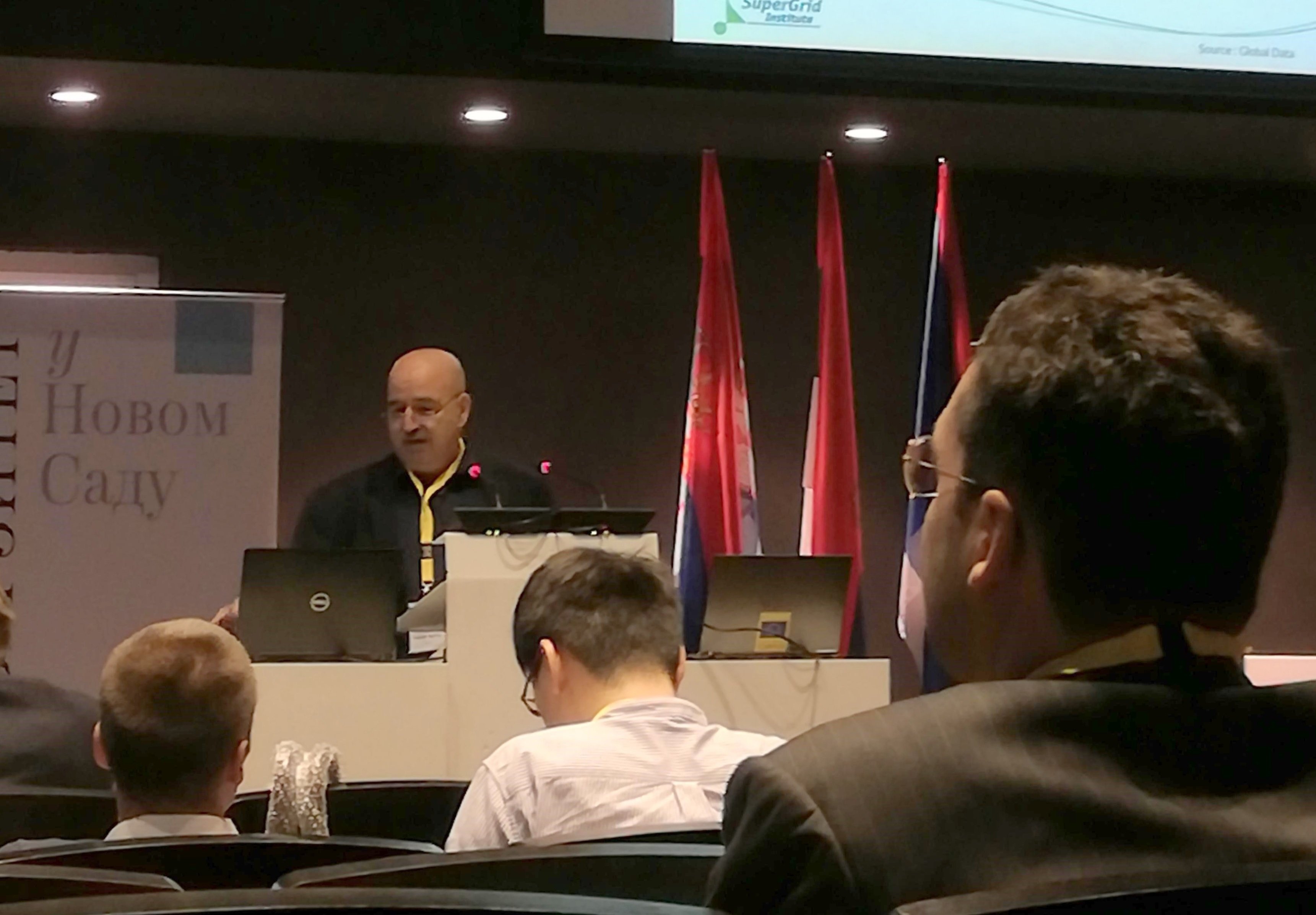
The large-scale integration of renewable electricity generation poses both structural, economic and management challenges. Among the major challenges, one can note the grid integration and the routing of this energy from the production units to the consumption poles. Major issues have to be faced like insufficient transmission capability, inertia reduction, stability margins mitigation. The HVDC is not a new idea but it can provide some interesting answers to these challenges. The keynote will list the locks and how they can be addressed by the HVDC grid. Finally, the underlying scientific issues will be discussed.
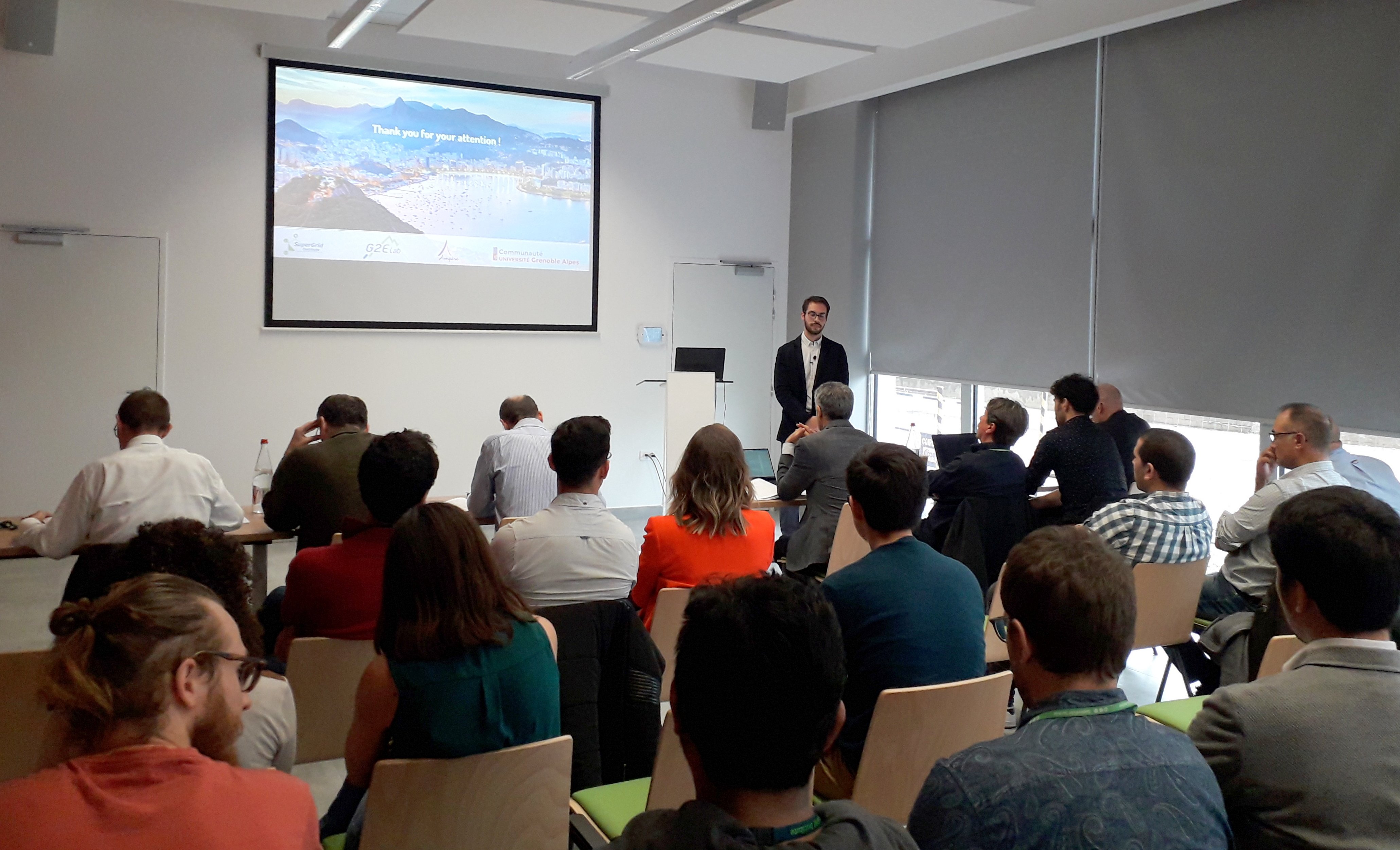
High Voltage Direct Current (HVDC) grids are considered a promising solution for problems faced by nowadays power system such as: lines congestion, integration of large amounts of renewable power and enhancement of AC system stability. Among the challenges in the deployment of a HVDC meshed grid, the protection of these grids is regarded as one of the most critical. The protection of HVDC grid is challenging not only because the swift transients and fault currents without zero-crossing, but also due to the impact a DC faults can have on the AC system. Several propositions for HVDC grids protection strategies can be found in literature....
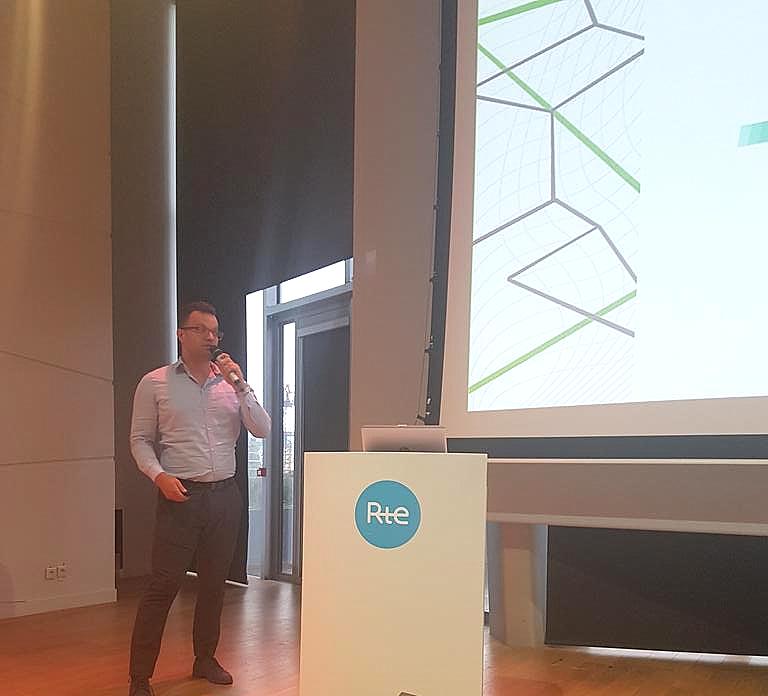
Every year the French chapter of IEEE Power & Energy Society (PES), in collaboration with SEE (Society of Electricity, Electronics and Information and Communication Technologies), recognises outstanding PhD theses and hands out the “outstanding engineer of the year” prize at an annual evening ceremony. This Wednesday the 9th of October, Ahmed Zama was honoured with the IEEE “Doctorate Award” for his thesis work on “Modeling and Control of Modular Multilevel Converters (MMCs) for HVDC applications”.
S’inscrire à notre newsletter :
Rejoignez-nous
Dans notre newsletter trimestrielle, nous partageons des informations sur nos derniers projets, produits et services et indiquons les prochains événements où vous pouvez nous trouver.
You cannot copy content of this page