Introducing Loïc Leclere, Director of our Power Electronics & Converters department
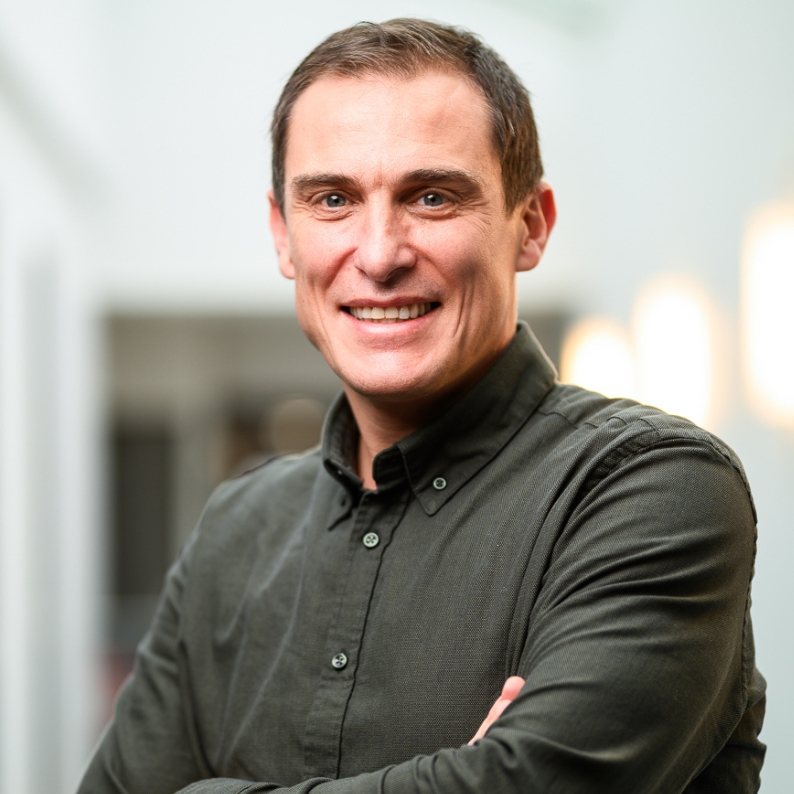
We are delighted to present the latest in our series of features on the leadership team at SuperGrid Institute, Loïc Leclere. Loïc joined SuperGrid Institute over six year ago now with a strong background in R&D management, strategic leadership and managing multidisplinary teams. With these skills combined, he is now leading the Power Electronics and Converters department, overseeing innovative activities related to medium-voltage energy conversion technologies.
Can you tell us more about your background?
Since 2019, I have held the position of Director of the Power Electronics and Converters programme at SuperGrid Institute. I oversee R&D and innovation activities related to medium-voltage energy conversion technologies.
Previously, I spent nearly 20 years at GE Power Conversion Converteam and Alstom, occupying various roles technical leadserhip positions. I was notably Technical Manager for the Marine business and R&D Manager for power electronics, with responsibilities ranging from product strategy and innovation programme management to engineering management and customer support.
Throughout my career, I have combined a solid technical expertise with strategic leadership, managing multidisciplinary teams, piloting the development of new solutions and adding value in complex industrial environments.
What made you want to join SuperGrid Institute?
Before joining SuperGrid Institute, I worked for a large international group. I felt the need to join a more human-sized organisation with greater autonomy in decision-making.
SuperGrid Institute has given me the opportunity to broaden my responsibilities and make a tangible contribution. It has also allowed me to exchange with R&D teams who are extraordinary both in terms of their technical skills and their human qualities. SuperGrid Institute is a unique company in the French R&D ecosystem, and I am proud to have joined its teams.
By combining our expertise and testing resources, we are contributing to the development of the electricity networks of the future in support of the energy transition.
What are the main activities of your department?
We develop advanced power electronics solutions to facilitate the integration of renewable energies and the transition to an all-electric, low-carbon energy system. We closely collaborate with industrial partners and public institutions to accelerate the deployment of MVDC technology, among other things.
Our activities focus on the development of:
- High-performance power converters for medium-voltage direct current (MVDC) networks
- Innovative transport and distribution architectures
- Control and protection strategies
- Development of test benches for power modules, converters, protection equipment and insulation systems
What projects are you currently working on?
We are currently working on three main projects:
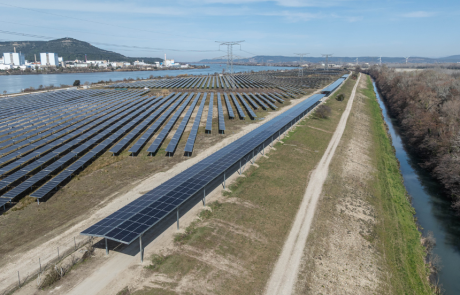
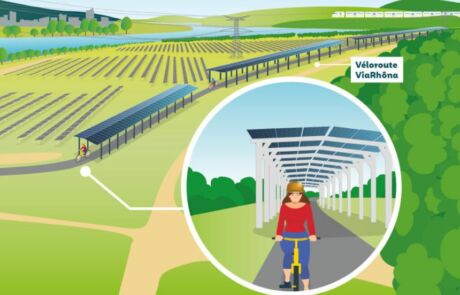
The first project we are working on is OPHELIA, an innovative R&D project conducted by CNR, in collaboration with Nexans, Schneider Electric, SNCF and SuperGrid Institute. The aim was to design and test the concept of collecting medium-voltage direct current photovoltaic energy that could be suitable for already artificial spaces (roadsides, dykes, cycle paths, railway tracks, etc.), in order to make use of these areas without disrupting their main use.
SuperGrid Institute developed, assembled and tested the 3 DC-DC solid-state transformer located at Caderousse in France, as well as as the DC network control system for the installation. The demonstrator was successfully commissioned at the end of 2025, and we are particularly proud of this achievement.
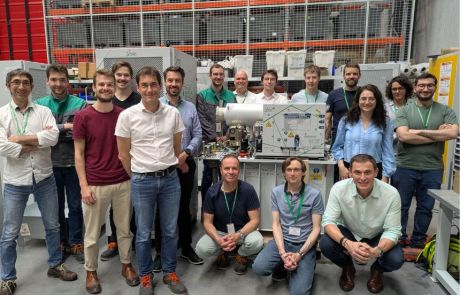
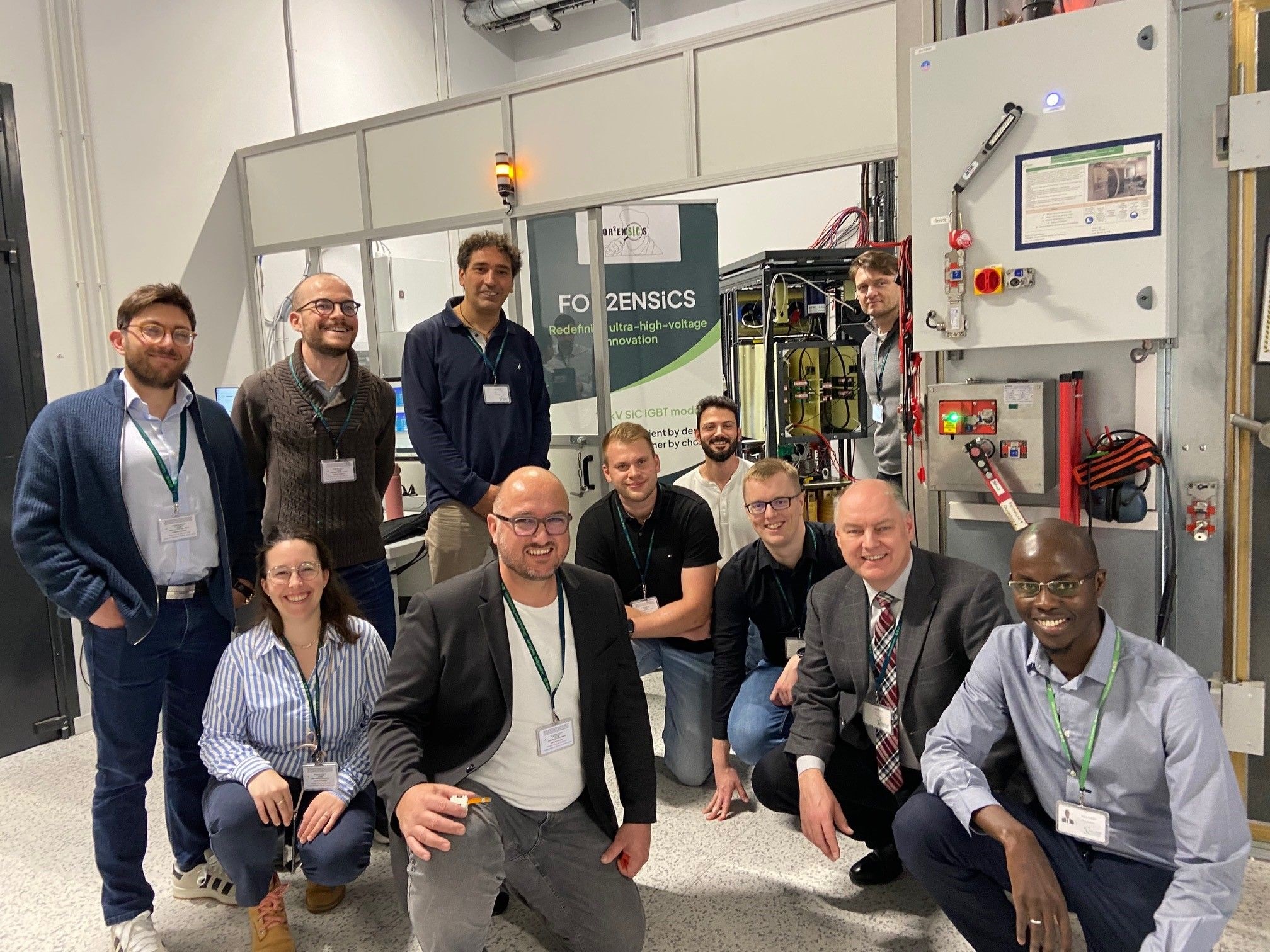
FOR²ENSiCS (Future Oriented Renewable and Reliable Energy SIC Solutions) is a European project funded under the European Commission’s Horizon Europe programme. The aim is to demonstrate the performance of new silicon carbide components in order to meet challenges such as the integration of renewable energies or electric charging infrastructure into electricity distribution networks. More specifically, SuperGrid’s Institute contribution concerns the development, prototyping and validation testing of a compact, high-efficiency, low-cost 250kW DC/DC converter capable of switching from low voltage (LVDC) to medium voltage (MVDC).
POWERDIAG is a collaborative project with ALSTOM TRANSPORT that aims to develop methods for diagnosing power modules and predicting their remaining service life. The project addresses ageing due to thermal cycling as well as humidity. Humidity appears to be a critical condition that significantly affects the failure rate of equipment exposed to uncontrolled environments (open air), such as traction converters on board trains. In this project, SuperGrid Institute is developing, building and operating thermal cycling test benches for power modules suitable for railway traction applications.
What are the major challenges to come for the energy transition?
The electrification of uses (charging infrastructures for electric vehicles, data centers, hydrogen production, electricity intensive processes, etc) is a key driver in the decarbonisation of energy systems.
All these new uses require power electronics, which is at the heart of the programme’s activities. The task now is to create the best conditions to contribute as effectively as possible to this change. This involves forging links with industrial partners. We need to make ourselves known, gain the trust of manufacturers and offer them new ideas.
In your opinion, what added value does SuperGrid Institute bring to the industry?
As an innovative agent, we are able to achieve the Technology Readiness Levels (TRL) expected by manufacturers when acquiring innovative technologies or cooperating in the development of new technological building blocks. We offer an attractive collaborative environment with unique testing facilities, combined with a high level of expertise, to successfully carry out collaborative projects with our industrial partners.