Why Solid-State Transformers
are key to the future of power distribution
We’re launching a new article series dedicated to one of the most promising technologies for future energy systems: solid-state transformers (SSTs). As power distribution grids evolve to integrate renewable energy sources, hybrid AC/DC architectures and advanced power electronics, solid-state transformers (SSTs) are emerging as a key enabling technology. They promise higher power density, advanced control and new services compared to conventional transformers. However, technical and economic challenges remain.
In this series, we will explore the fundamentals of SSTs, their key advantages and the design and technology challenges that must be addressed to move from research to real-world deployment. Let’s start with the basics: what is a solid-state transformer and why does it matter for the future of power distribution?
What is a solid-state transformer ?
Conventional low-frequency transformers (LFTs) have been the backbone of power systems for over a century, providing robust galvanic isolation and voltage adaptation with high peak efficiency and long lifetimes. However, they are inherently passive, bulky and inflexible: they cannot actively control power flow, manage power quality issues or interface seamlessly with DC systems and distributed energy resources.
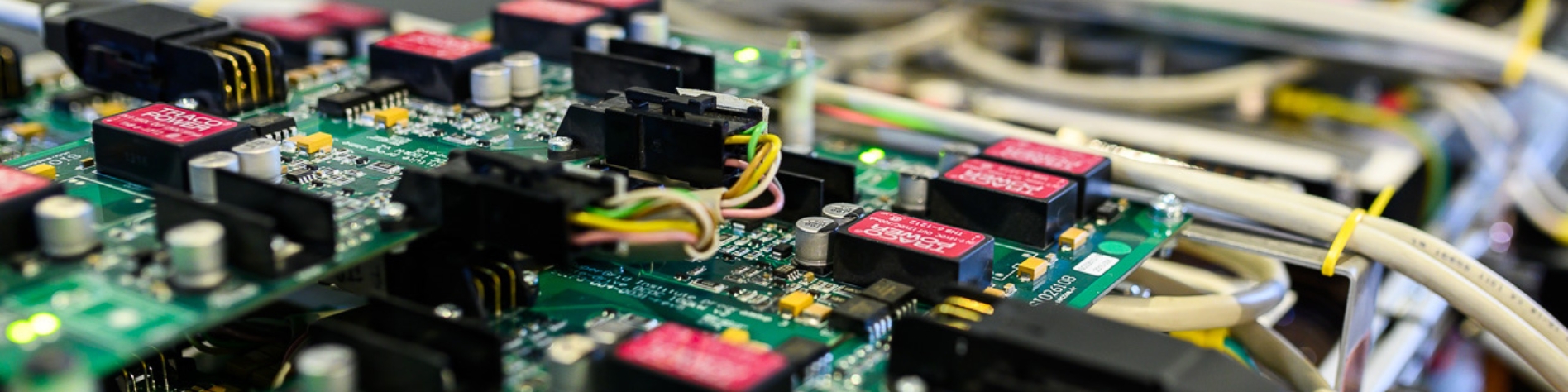
Solid-state transformer technology, also referred to as power electronic transformers (PETs), replace the single iron copper block with a combination of fast power converters and a medium or high-frequency transformer. This architecture dramatically reduces weight and volume and more importantly turns the transformer into an intelligent node capable of controllable power exchange, AC/DC conversion and advanced grid support functions.
Typical applications for solid-state transformers
Solid-state transformers are relevant wherever compactness, controllability and multi‑port capability are valuable:
- Smart distribution and hybrid AC/DC grids: SSTs can act as “energy routers,” controlling active and reactive power, connecting AC and DC feeders and improving voltage profiles and flexibility.
- Renewable energy and storage: At MV/LV interfaces, SSTs can combine isolation, AC/DC conversion and power quality functions, while providing DC buses for PV and batteries.
- EV ultra‑fast charging: high‑power charging hubs can benefit from SST-based AC/DC interfaces that are compact, grid‑friendly and capable of delivering stable DC for fast chargers.
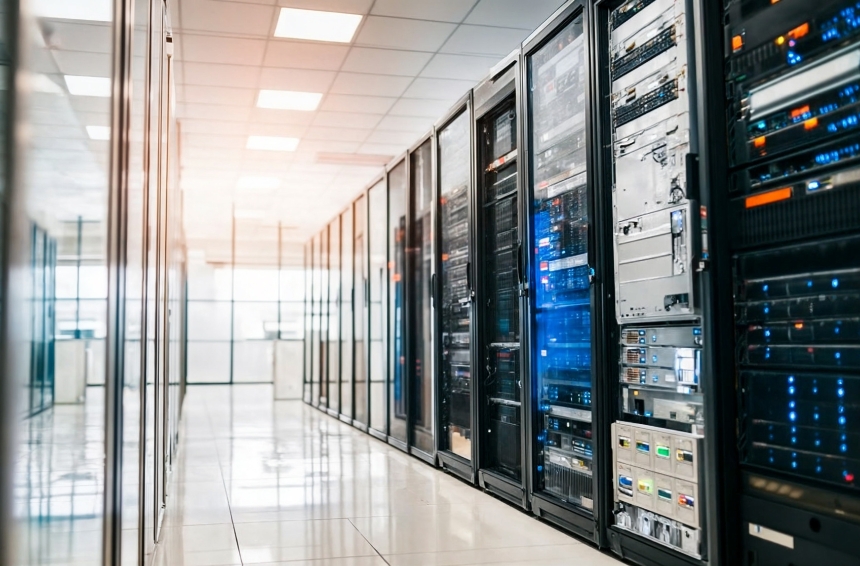
- Traction and data centers: rail systems and large DC‑oriented loads such as data centers can use SSTs for high‑density conversion, multi‑voltage interfaces and improved power quality.


Technology fundamentals
An SST is typically built from several functional blocks including an input stage connected to the utility grid, an isolated high‑frequency link via a medium‑frequency transformer, and one or more output stages providing AC and/or DC. Architectures range from two‑stage to three‑stage designs, often using multilevel converter concepts for scalability and power quality. Wide bandgap semiconductors such as silicon carbide (SiC) and gallium nitride (GaN) are key enablers of SST technology, allowing higher switching frequencies and efficiency, while digital control platforms coordinate modulation, protection and grid-support functions.
Key challenges and opportunities for solid-state transformers
In the last decade, solid-state transformers have moved from concepts to full‑scale promising demonstrators in traction, distribution and renewable applications, supported by progress in semiconductors, magnetics and control. While they are not yet a universal one-for-one replacement for conventional transformers, their unique capabilities create compelling value-added opportunities.
- The primary cost drivers remain the advanced power semiconductor devices and high-performance magnetics required for high-frequency operation.
- Reliability and lifetime under grid conditions are under active study, particularly regarding: semiconductor stress; electrical insulation under combined high common-mode voltage and high dV/dt, and thermal management in compact designs.
- Protection and fault behaviour differ markedly from traditional transformers, pushing utilities to rethink protection concepts in power-electronics‑rich networks.
- Finally, standards, grid codes, and interoperability frameworks must evolve to accommodate these actively controlled, software‑intensive devices.
Learn more about solid-state transformers in our article series
Now you understand the fundamentals of SSTs and their key advantages and challenges, keep a look out for our upcoming articles to delve deeper into this exciting technology and its applications!